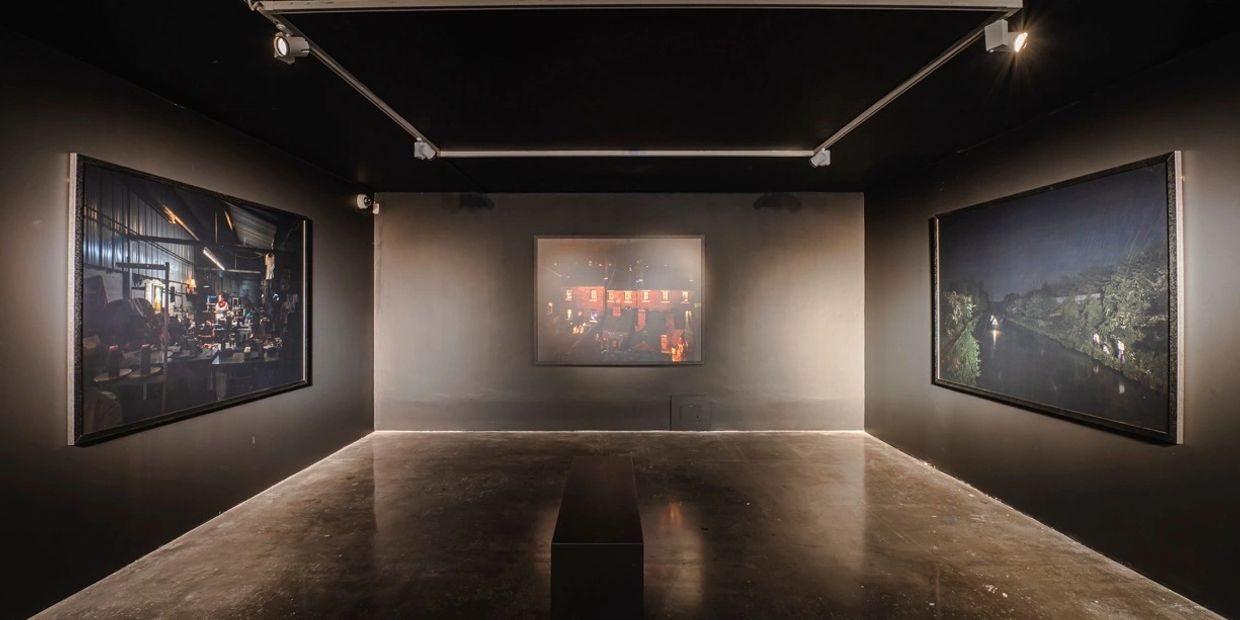
The Exiles
A series of large-format photographic tableaux documenting the lives of South Asian empire workers who arrived in the Black Country in the 1960s. Works composed from hundreds of source files, applying filmic principles of set-building, casting, costume, and lighting to create single images that function as silent, operatic films.
The five tableaux
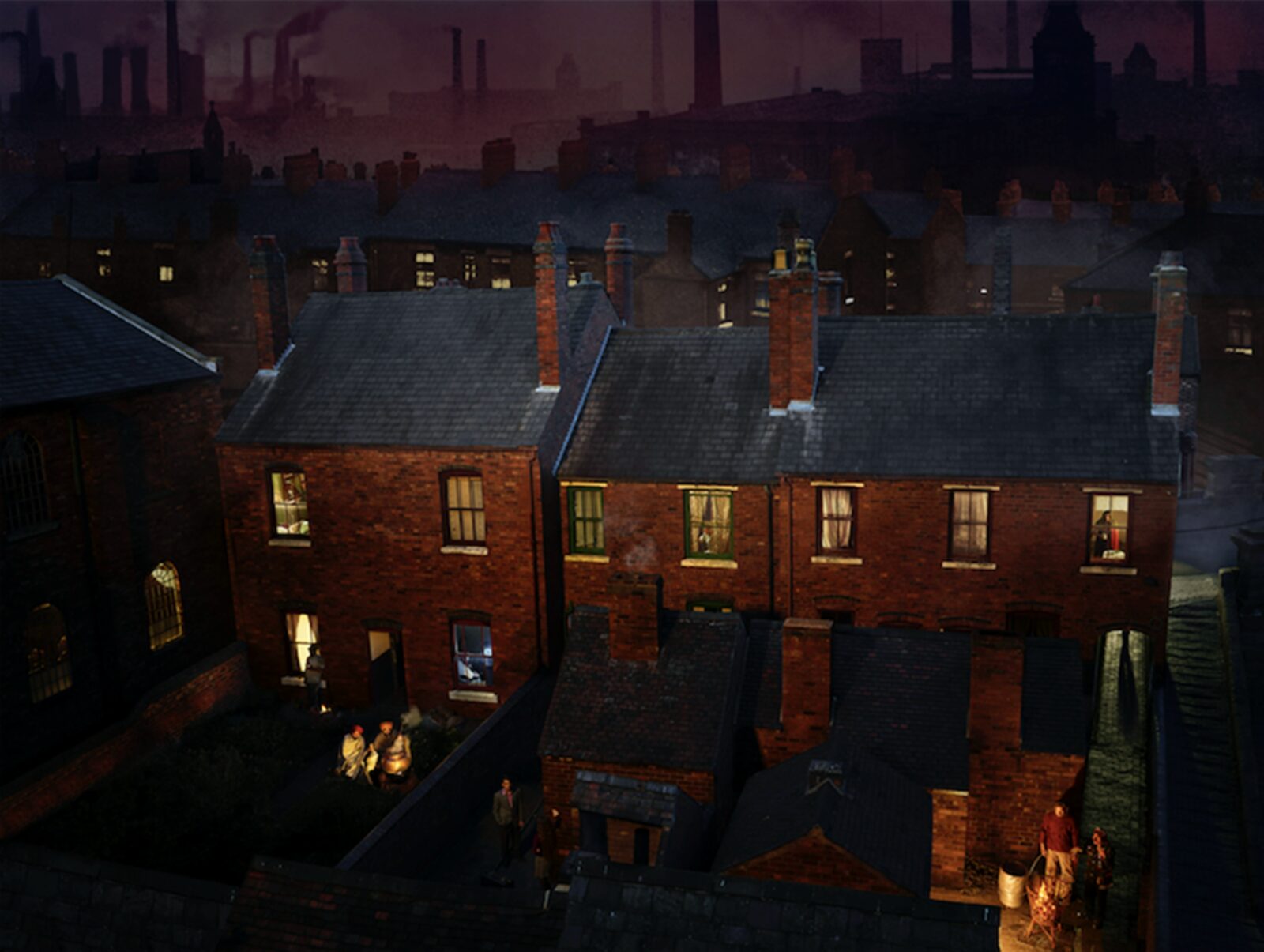
Dayshift
2019 · Over 800 source files
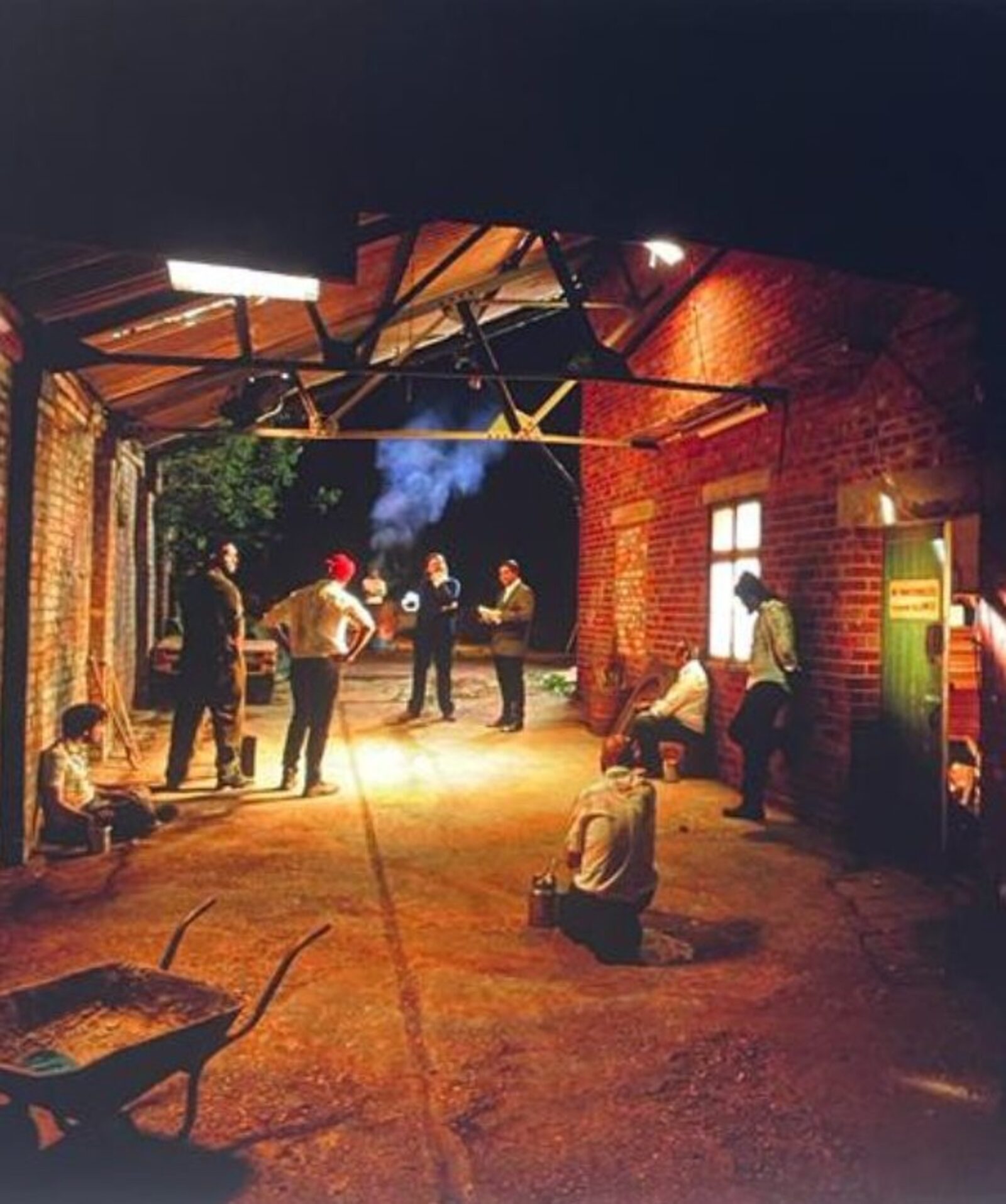
Back garden of a terraced street. The sky is dark and burning, and a group of young men are present but distant from each other and themselves. On the left, a man stirs a pot on a gas fire. To the right is an outhouse, where one man is singing and another stands drunk. In the background, a TV plays a black and white Tom and Jerry cartoon, while men sleep and a neighbour peers through a window.
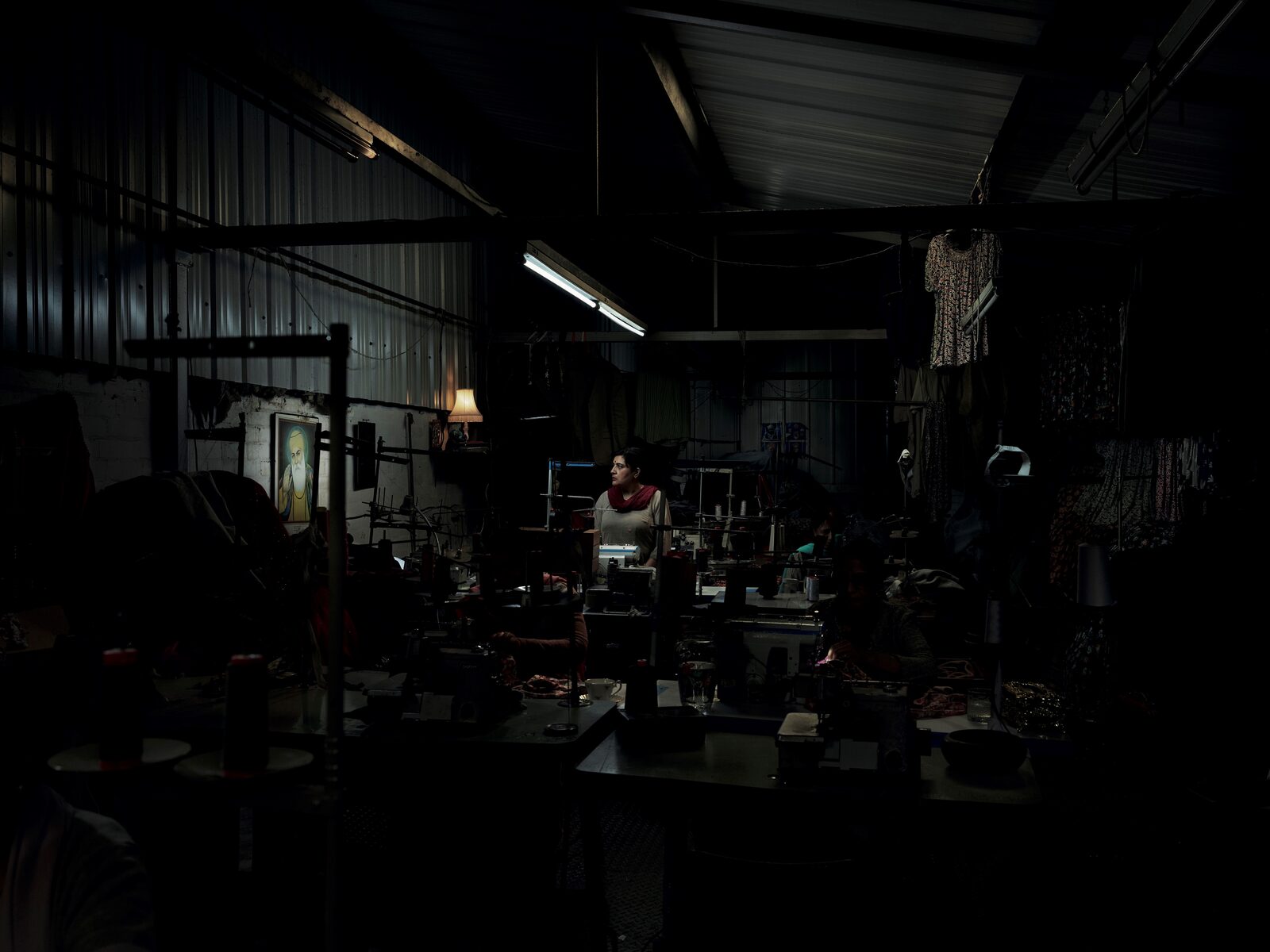
Seamstress
2022
RBSA Photography Prize, First Prize
The central performer is one of many women sewing in a factory. A light pulls her out of the crowd. Her mind is elsewhere, in her unspoken past, as she looks at a picture of Guru Nanak. The performer wore the clothes and jewellery of her late mother who used to work in sewing factories like this when she arrived in the UK.
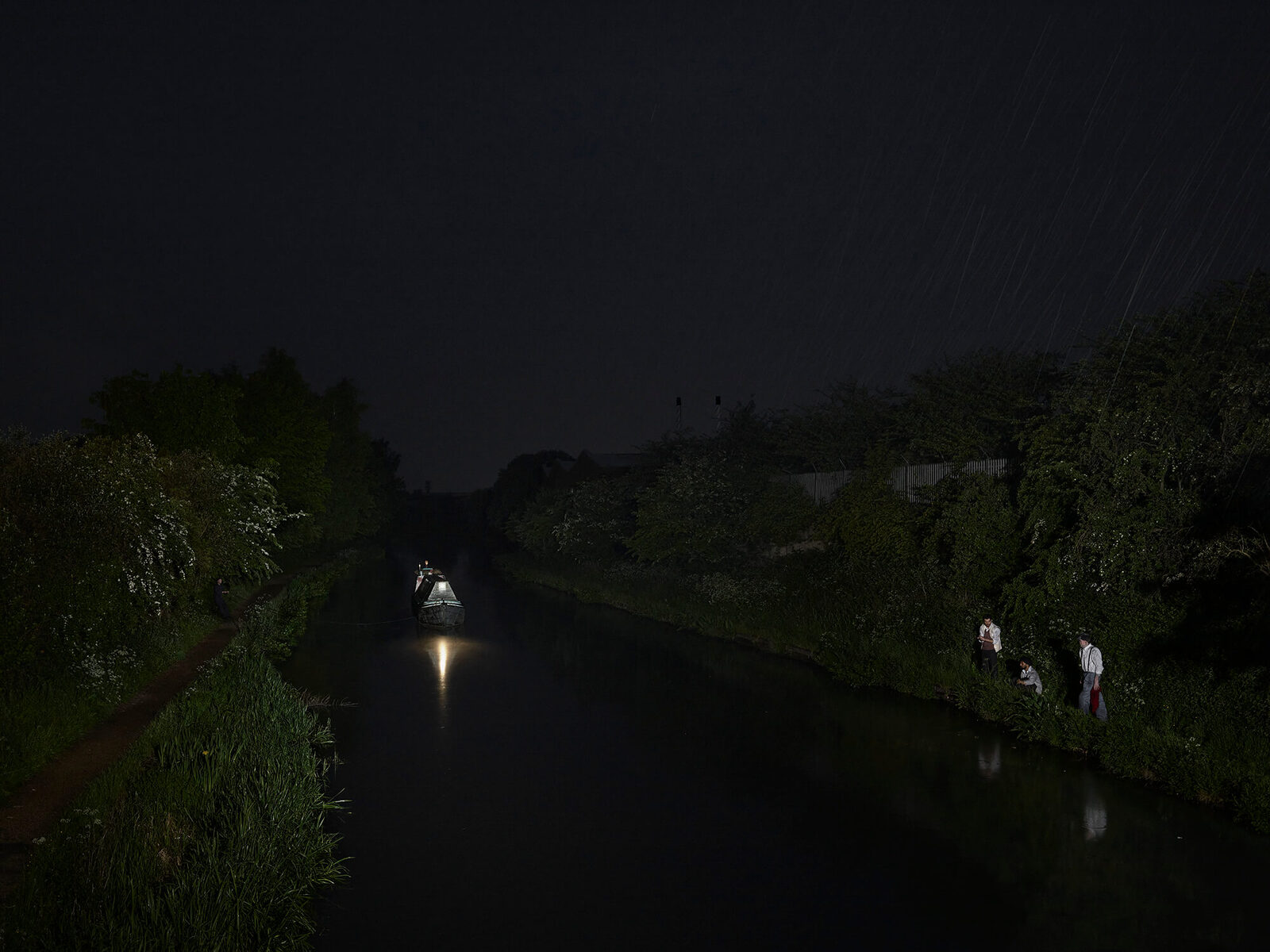
The Bridge
2022
Mid morning, a milky autumn light. Near ground, a barge is led on a rope by a tall haggard man in dark work clothes. Three Asian men, dressed in trousers and tight jumpers with sleeves rolled up, stand on the bank staring across the canal at something we cannot see. A mysterious item of clothing, a sari, or shawl, lies on the bank.
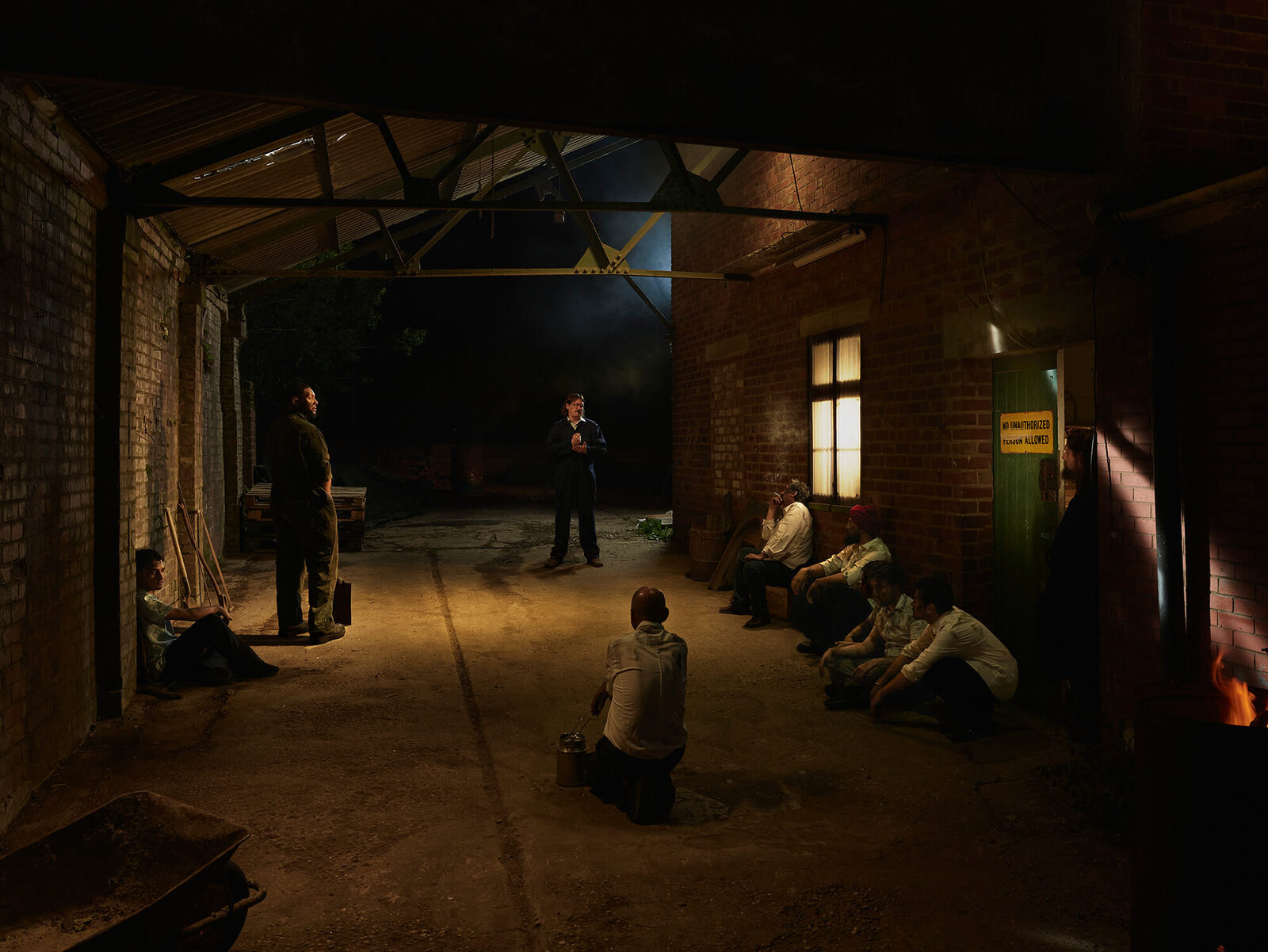
Furnace Men
2022
Inside the furnace roars, casting molten light. Dust motes dance in the air. An English foreman stands on a platform, gesturing with firm conviction. The men before him are exhausted, their faces hidden by grime. They don't listen, they don't understand. The foreman speaks of double shifts and joining unions.
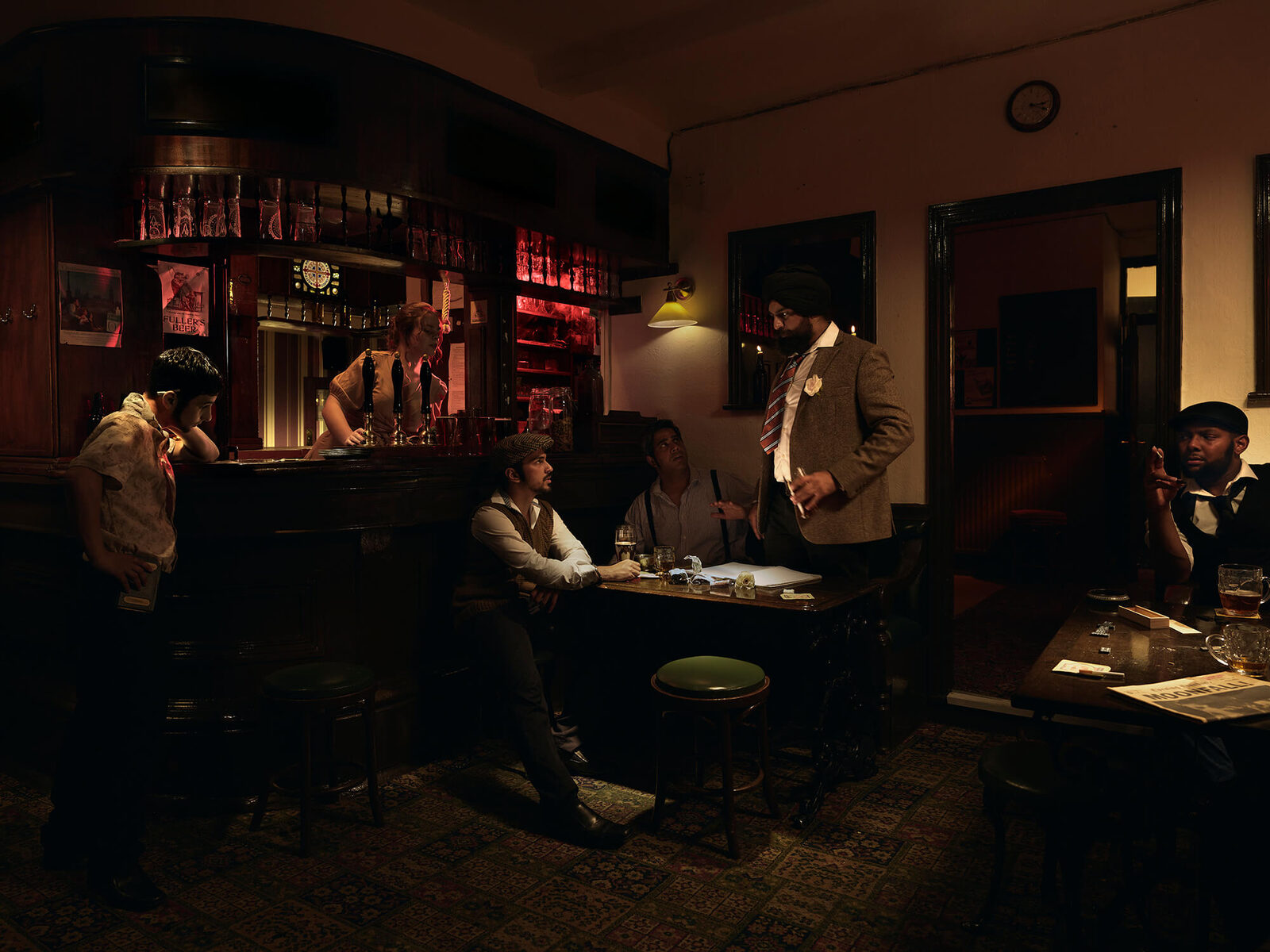
PayDay
2022
Red light bathes the bar, awash in sex, blood, and guilt. Men carouse, it's payday. In the centre, they place their money for the ritual of Cooth, a loan between friends. The banks will not give loans to newcomers, so they must rely on each other. This is more than just a loan, it is a bond of brotherhood, a promise of hope for a better future.
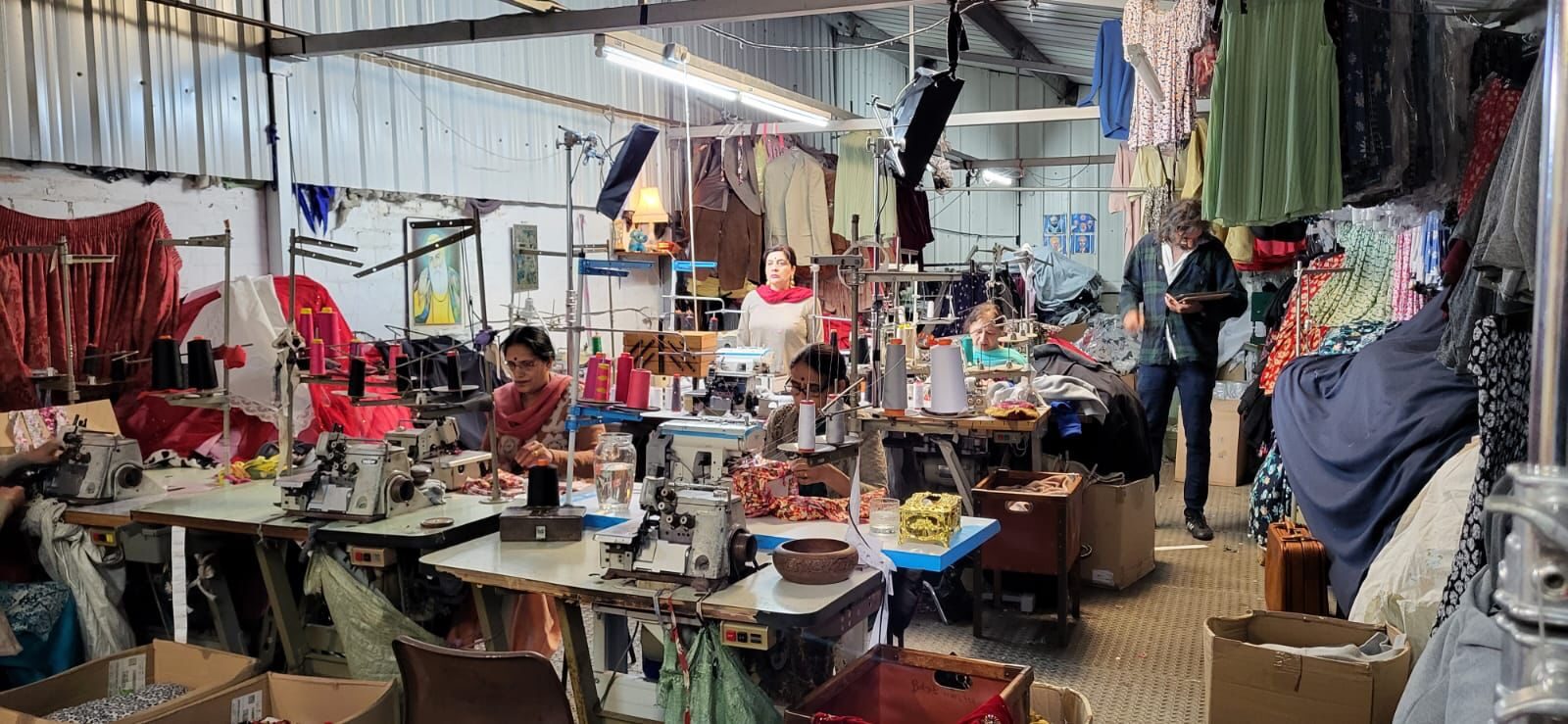
The Seamstress set, sewing workshop, Walsall
Behind the Scenes
On location across the Black Country, casting, costume, and set builds for The Exiles photographic series, May 2022.
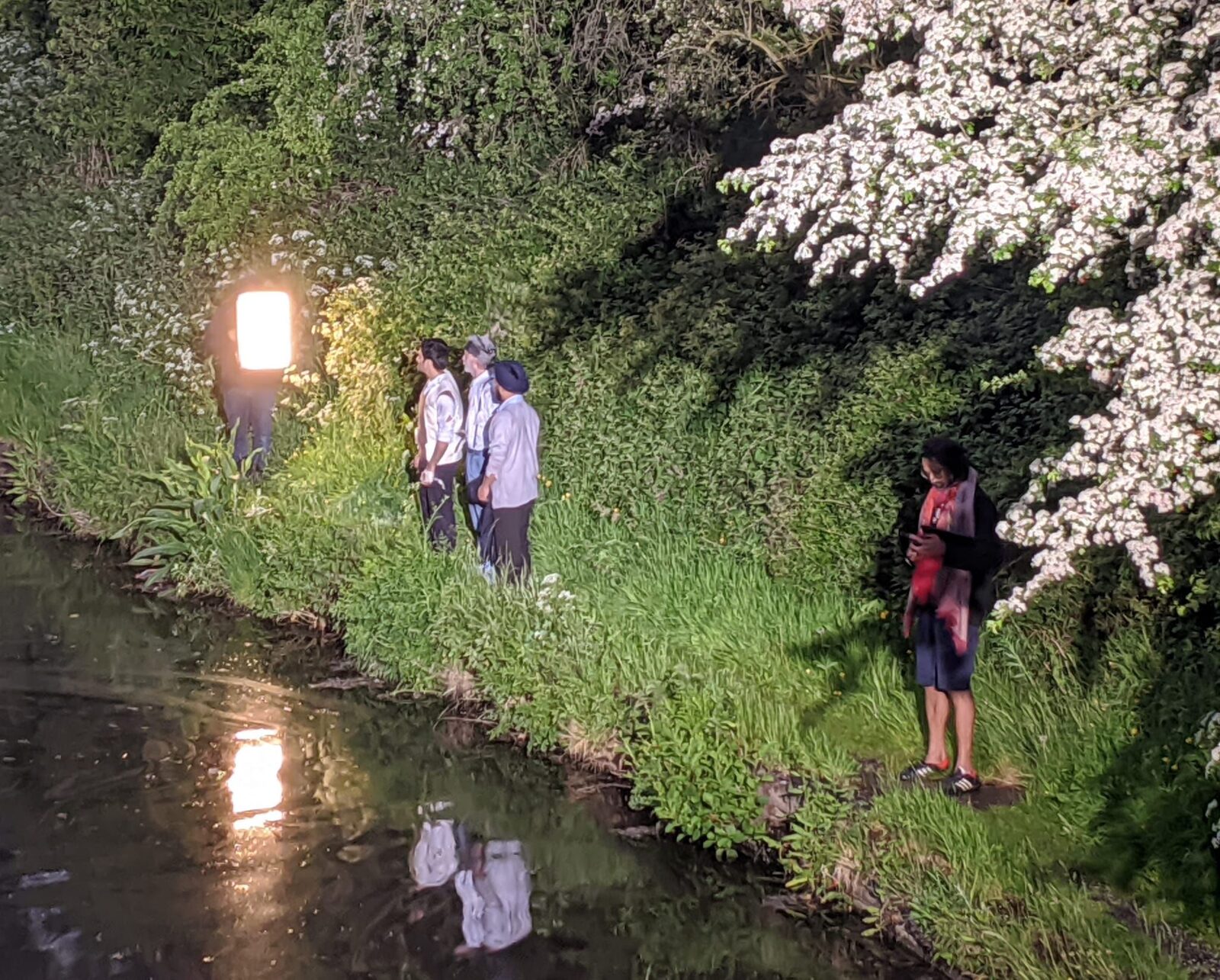
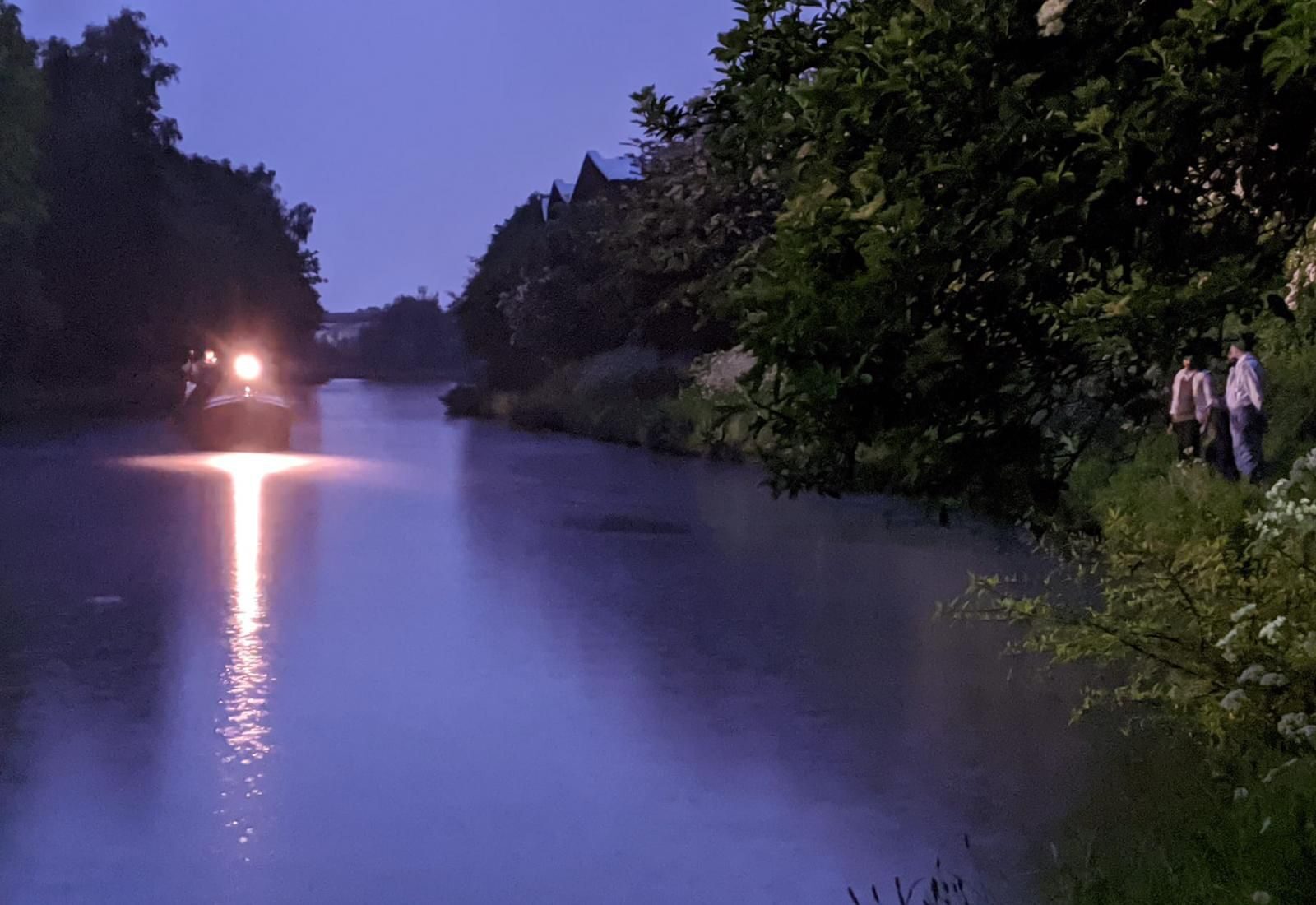
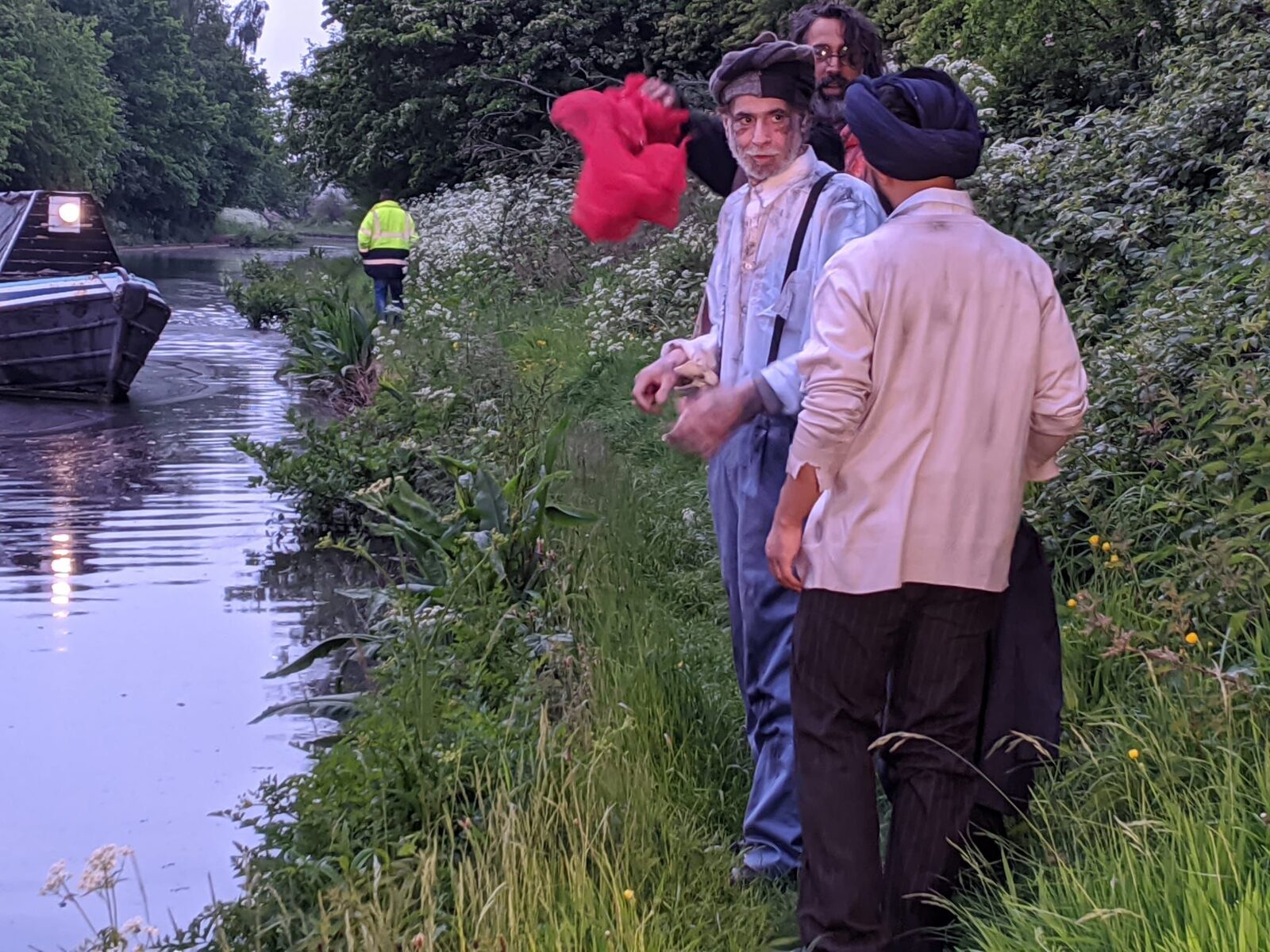
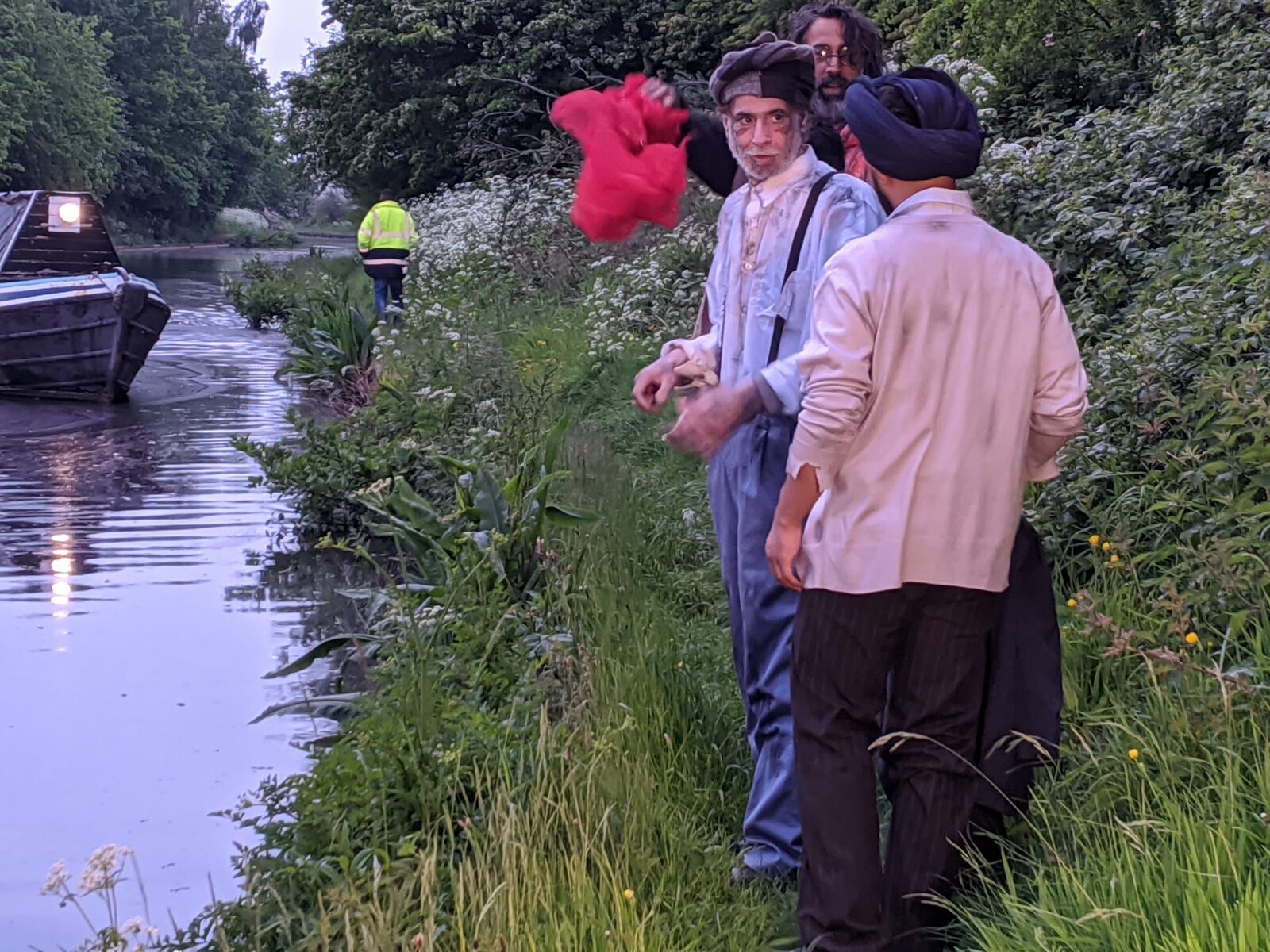
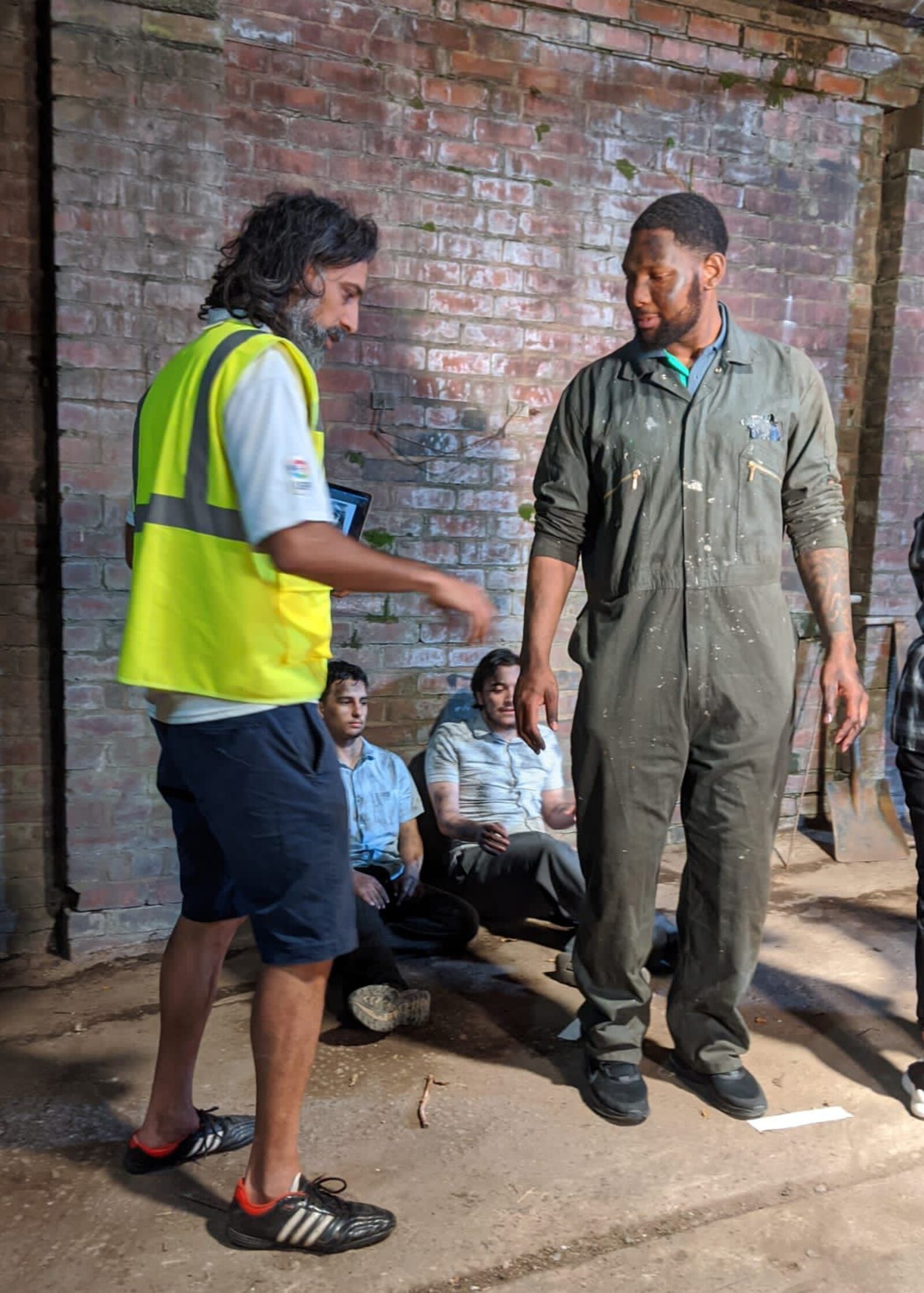
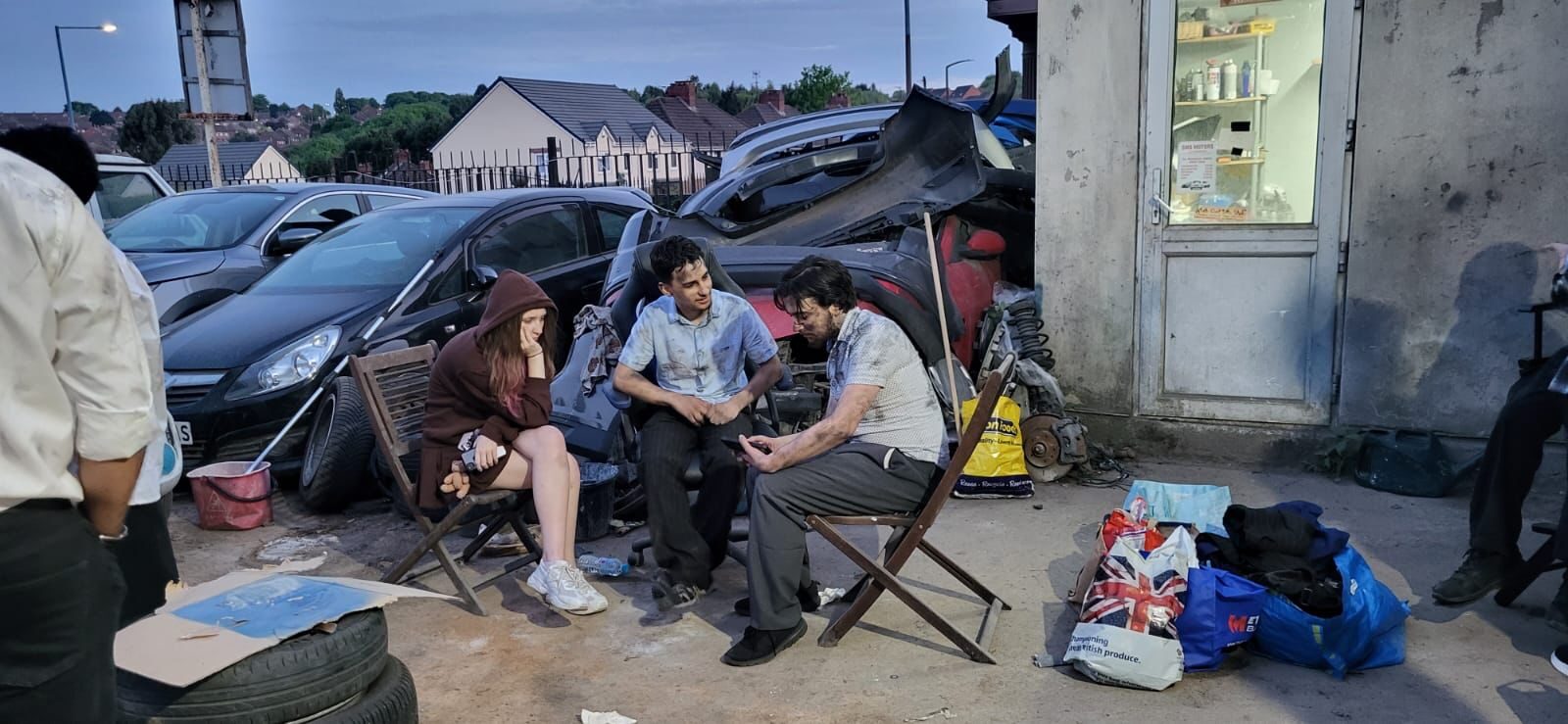
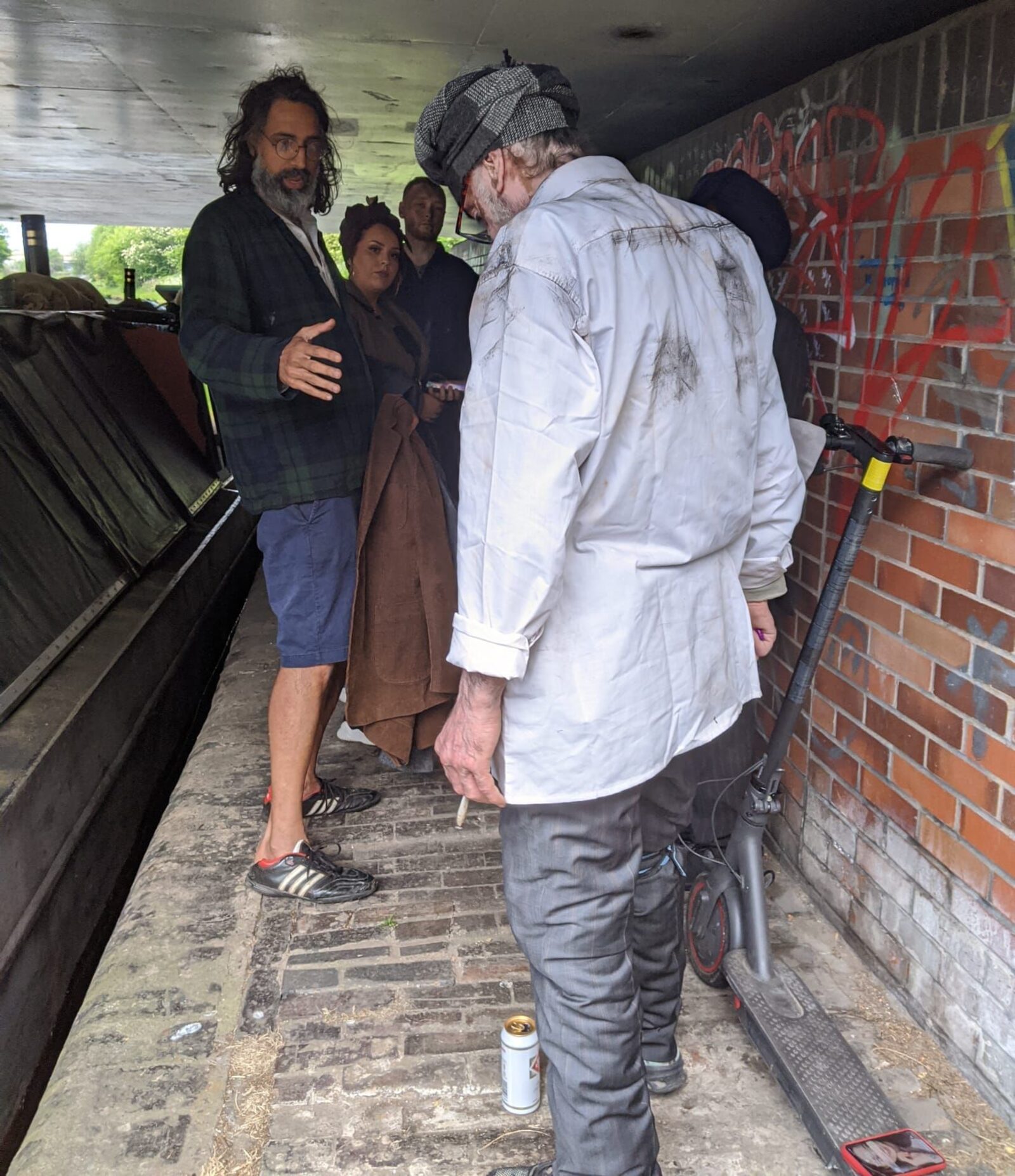
Production photographs, The Exiles, May 2022
The Making of The Exiles
A short film documenting the production of The Exiles photographic series — from casting and costume through to the large-format shoots across the Black Country.
Directed by Billy Dosanjh
© Reimagining Industrial Migratory Stories CIC
"A threshold is an interesting concept, where you're neither in nor out, when there is no return from that point, but the journey still remains incomplete."
In conversation
Billy Dosanjh in conversation with exhibition curator Melanie Kidd. Originally published in the [Traveller, Your Footprints] exhibition guide, New Art Exchange, Nottingham, 2022.
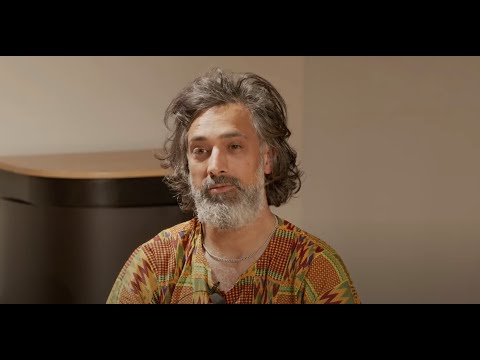
You've described your fundamental drive as an artist as exploring the harsh and romanticised setting of the de-industrialised Black Country. Tell us more.
I grew up in West Bromwich in the 80s and 90s within a close-knit, working class, Punjabi community, absorbing the stories from my parents' generation who experienced the epic upheaval of emigrating here from India in the 1960s. Their memories of back home, the journey, and the life that followed, some first-hand and some second-hand accounts, coupled with general community gossip and my own observations, formed a complex history and mythology about a people and a place which is little documented. I don't consider myself a politically minded artist, but I'm aware the most political thing you can do is tell a story. I'm fascinated by the history and also the landscape of the Black Country, one which couldn't have contrasted more with the rural landscapes my parents' generation left behind in India. As the global birthplace of the industrial revolution, the Black Country was once the epicentre of the world, yet through the deindustrialisation of the 70s and 80s, my hometown of Smethwick has long been one of the most economically deprived parts of the UK. The canals, terraced housing, and decommissioned factory buildings that remain continue to speak of this history. These settings form an important aspect of my films and photographs, not so much as backdrops, but as actual characters in the work.
Tell us more about the title, [Traveller, Your Footprints].
It's taken from a poem by the 19th century Spanish master, Antonio Machado. His work is introspective and stark and I find it powerful in capturing the themes of the great move, to which I'm drawn to explore in my work. I think I'm drawn to journeys, transitioning and moments of change in life's story arc, epiphanies, in particular. A threshold is an interesting concept, where you're neither in nor out, when there is no return from that point, but the journey still remains incomplete.
Tell us about the title of the series itself, The Exiles.
The title was inspired by the 1961 film by Kent MacKenzie, The Exiles, which chronicled a group of young Native Americans who left reservation life in the 1950s to live in Los Angeles. The film captures the confusion and complexity of adapting to cultures and environments so different to your own. This scenario, and the way in which the characters struggle with a process of self-reckoning, was so familiar to me. Like MacKenzie's protagonists, each of my characters in Exiles are trying to make sense of their lives. Additionally, each find themselves exiled from where they came from, economically there is probably no way back, and if they could return, would they even fit in? At the same time, they are exiled from the place they now find themselves in, be that through a lack of acceptance by the indigenous population, or maybe through a personal struggle to connect with such a foreign land.
Tell us more about the five settings: a sewing factory, a factory courtyard, a canal, a pub, and terraced houses and back gardens.
If you're to tell a story about the life of a person or a community, you need to consider the various contexts and spaces they exist within, the domestic space, the work space, the personal space, the social space. The first image made in the series was Dayshift (2019). In the foundry courtyard, the migrant workers take a break, away from the indigenous workers inside. They listen to their foreman who is asking them to cast their union vote. Due to language challenges, they are lost and confused. Some of these workers would go on to suffer from tuberculosis. The woman reading a letter in Day Shift returns again in the sewing factory. I remember that many of the women in my community worked there and these factories were unscrupulous places in terms of fair payment and health and safety. After work, the men would gather at the pub and drink pints of Mickey Mouse, half bitter and half lager. Due to their newly arrived status, bank accounts and loans were not available, so instead the men replicated the "cooth" banking system from India, where everyone would donate from their weekly wages, and at the end of the month, whoever had the greatest need would benefit. This system enabled families to buy their first homes in the UK.
Exiles in the community
The series works deeply with regional communities to make them stakeholders not only in the genesis of the stories portrayed, but also as key members of the cast and crew. The project creates a local spectacle and enters folklore in a way that revivifies aspiration and deepens the conversation of origin and migration.
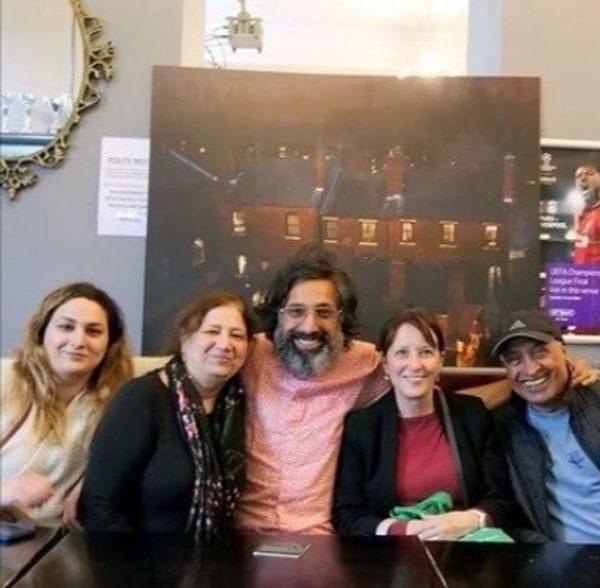
Community events in Walsall brought together old faces and new, joined by Balbir, the local poet laureate, who sang his 1960s-written songs, transporting the gathering to the soul of the area.
RBSA Photographic Prize winner
The Royal Birmingham Society of Artists (RBSA) Photography Prize Exhibition is hosted biennially to celebrate photographic art. Featuring 100 works from over 70 artists, the exhibition showcases the best of contemporary photography with the inclusion of both established and emerging photographers.
Two pieces from The Exiles series, Dayshift and Seamstress, were entered into the competition, for which he was awarded first prize.
"The level of skill and care taken to make these images are outstanding. Birmingham and its surrounding areas have in modern history been built on the back of migration, and Billy's work is fitting in celebrating and sending a positive representation specifically of the South Asian and Panjabi community of Birmingham and the Black Country. A wonderful nod to our forebearers, and something that resonates deeply with me personally as my mother worked in the sewing factories in Handsworth and my grandfather and father both worked in the foundries in Smethwick. Thank you for this beautiful depiction Billy, the intense detail in these images mean you could study them for hours."
Jaskirt Dhaliwal-Boora, Judge, RBSA Photography Prize
New Art Exchange: Kids Get Creative
The New Art Exchange runs drop-in creative workshops which make space for creative learning and lots of fun, Saturday Art Sessions. The Exiles pictures were incorporated into two of these sessions, focused on displaced people and third-culture children. The sessions inspired some great art, pics, and comments from parents and kids:
Mohammad from Pakistan (Third culture child)
He is an architect. Through Bill's work, Mohammad felt nostalgic. He created a firm house with recycled materials from his own village in Pakistan. He believes culture is essential to kids' growth.
Zoe, an Artist and Teacher
Zoe's daughter loves to create art from different perspectives. She is inspired by Billy's work as she can taste a culture she never knew before through art.
Naqsh's Daughter, From Pakistan
Mother is an artist, she came for the first time at NAE and was extremely happy to meet all participants at the SAC. She loves the fact that Billy's work talks about migration and at the same time it is encouraging for the younger generation.
Roqaiya (My daughter)
Roqaiya born in Poland and she expressed her memories from Poland through artwork inspired by Billy's art work.
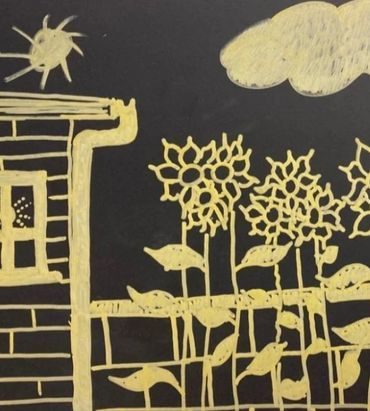
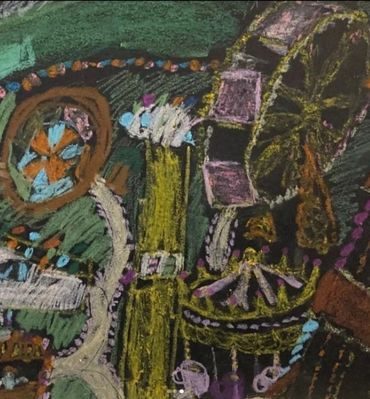
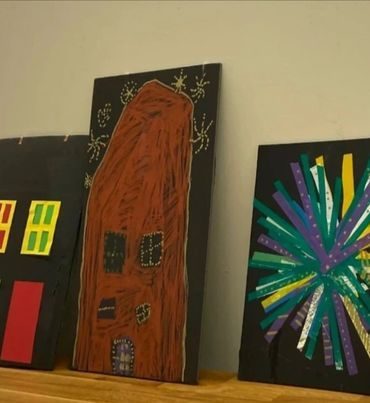
Saturday Art Sessions at New Art Exchange, children's responses to The Exiles
The voice of the community
Balbir, the local poet laureate, sang his 1960s-written songs at community events, transporting gatherings to the soul of the area. His performances became a defining element of The Exiles' connection to community memory.
The Exiles in exhibition
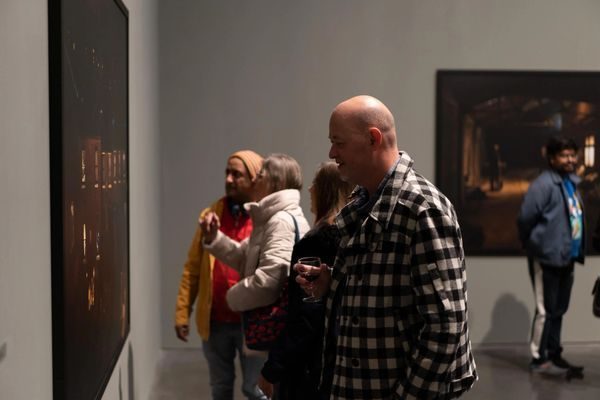
Scenes from The Exiles exhibitions at New Art Exchange Nottingham, The New Art Gallery Walsall, and BLAST! Photo Festival.
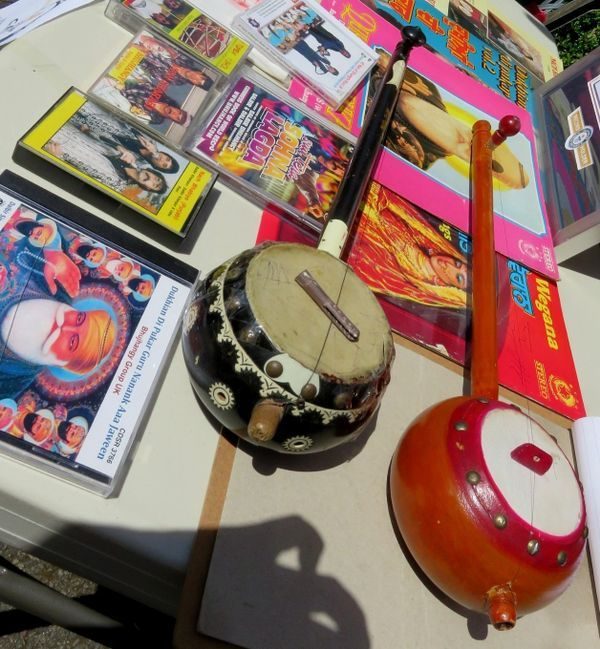
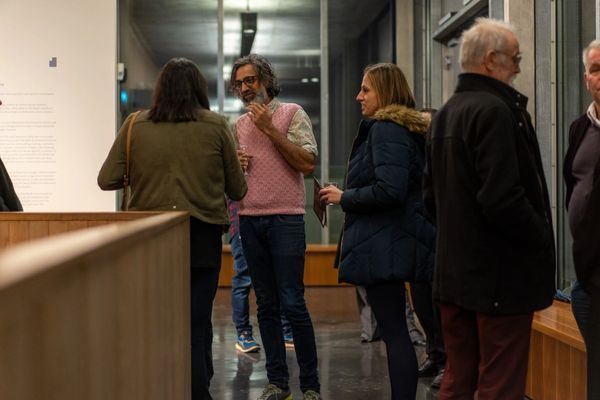
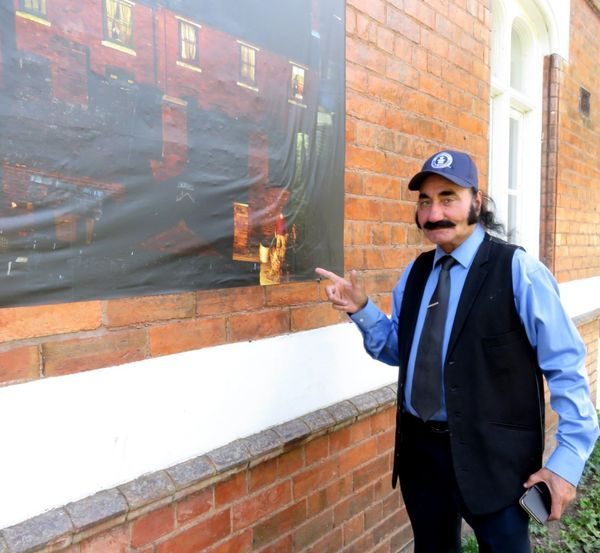
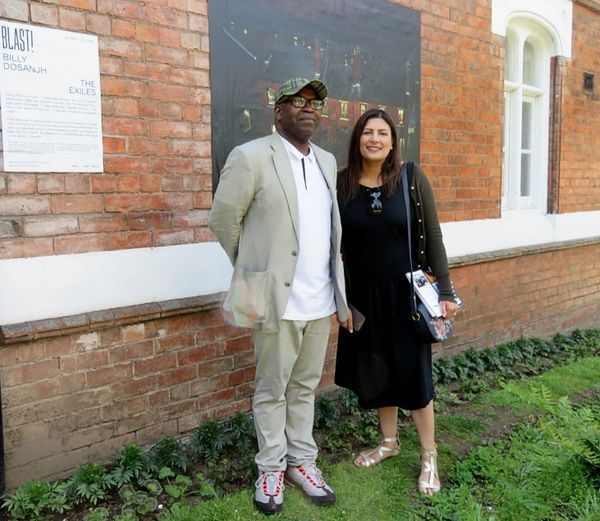
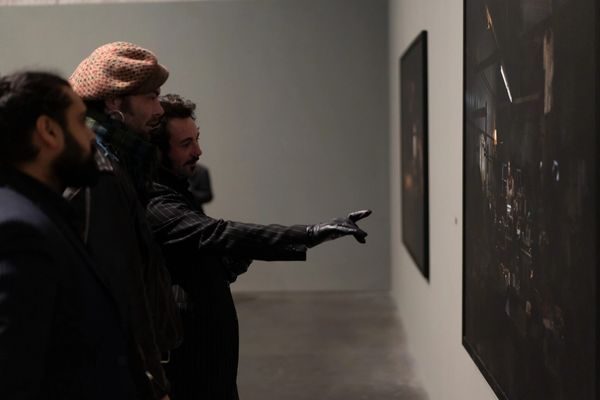
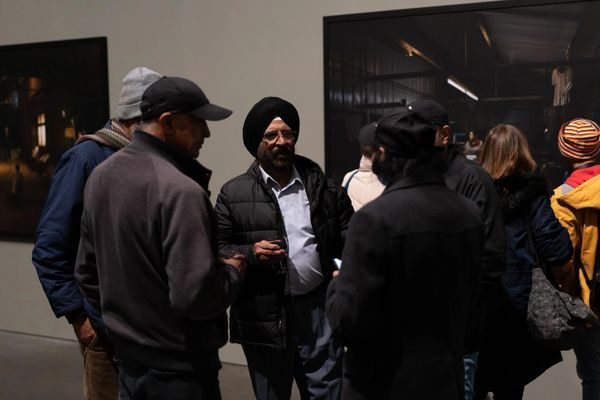
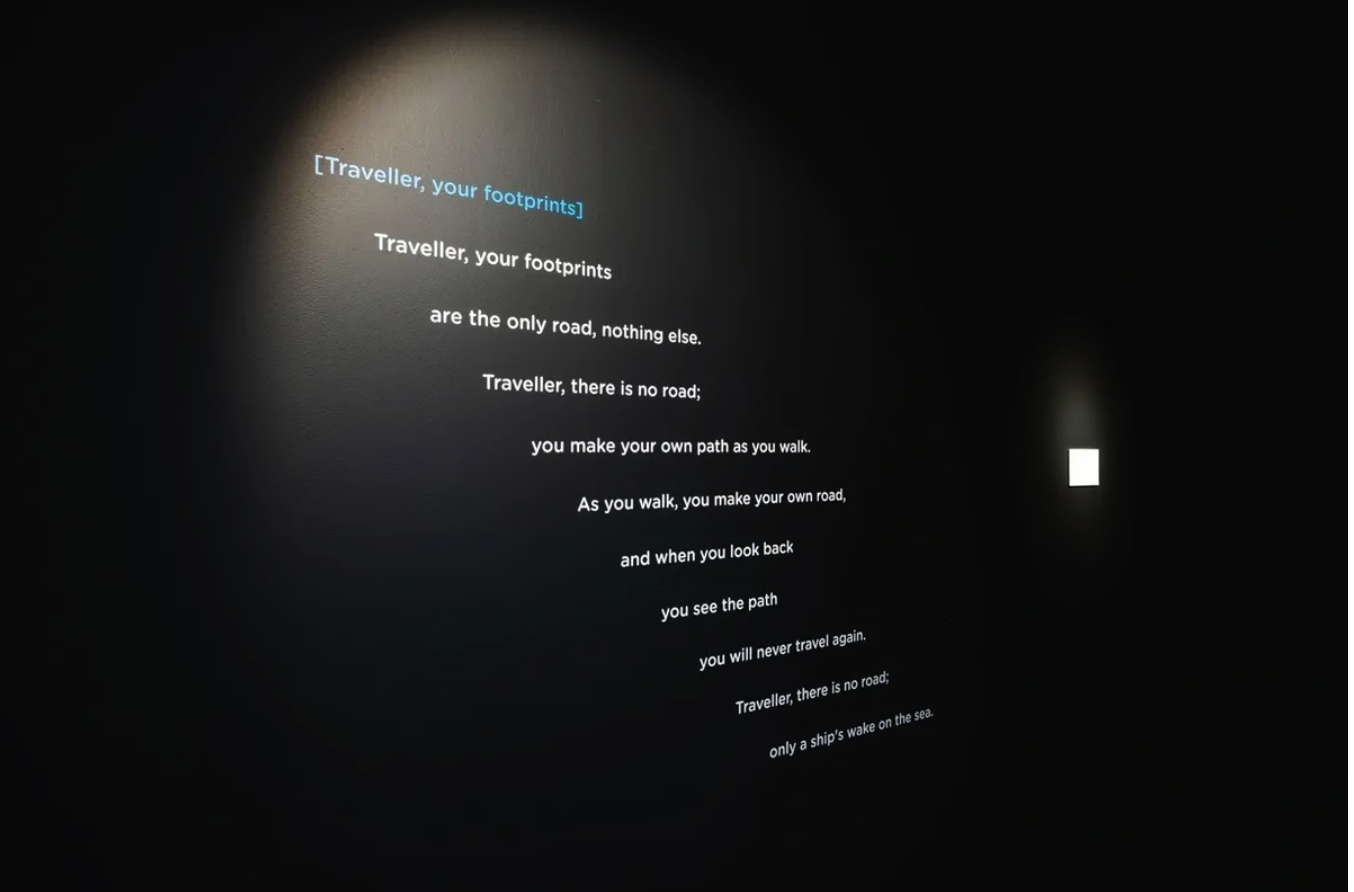
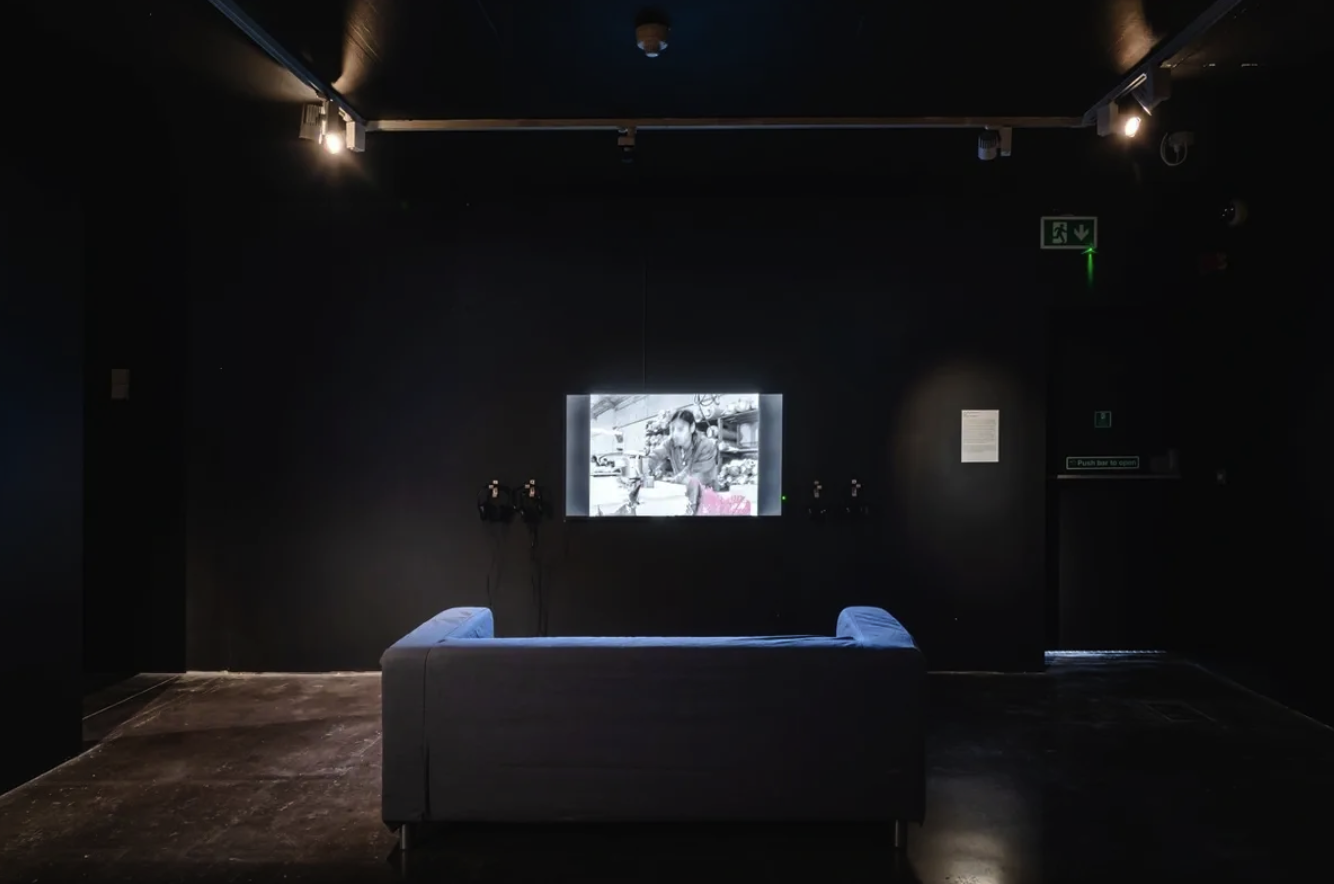
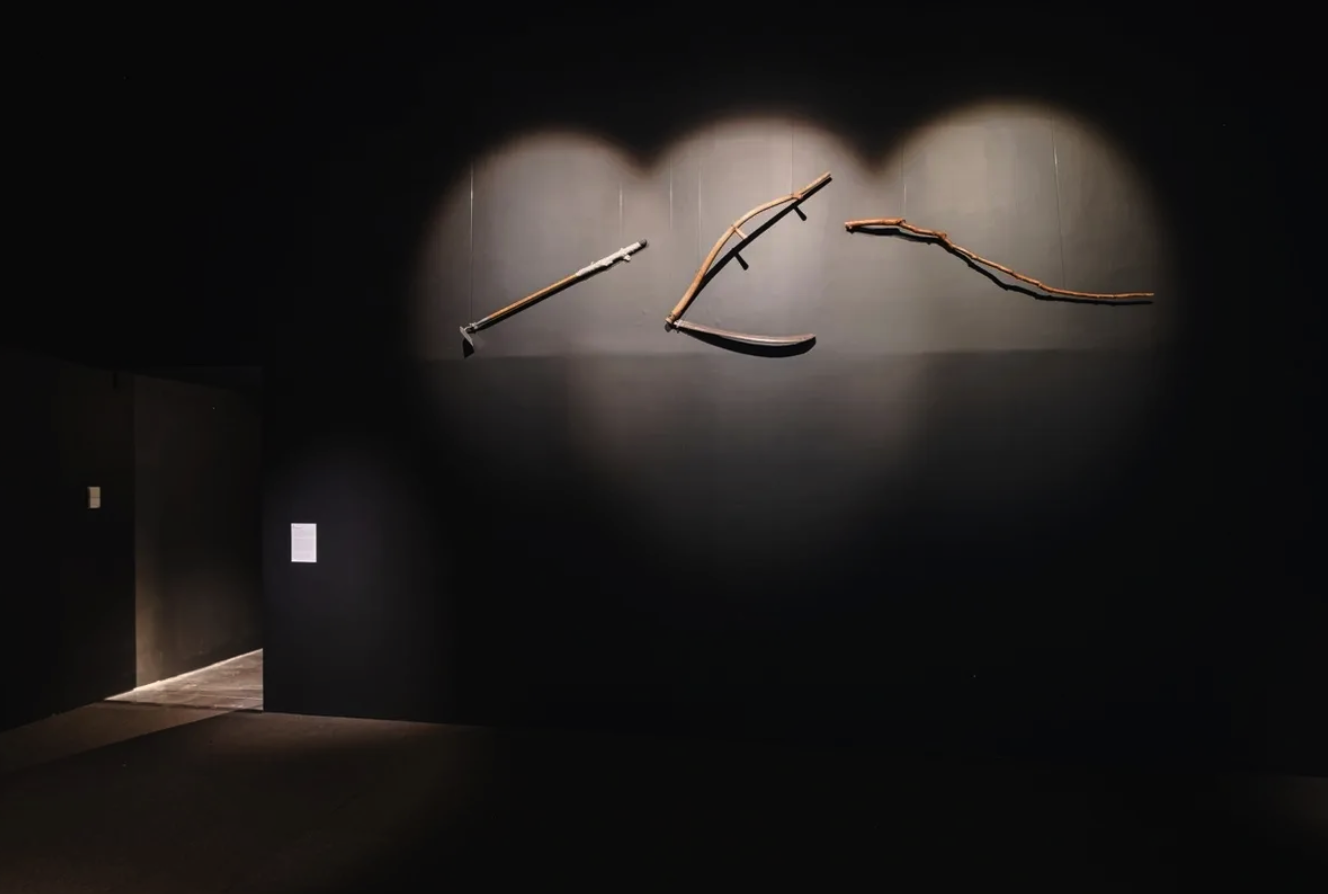
Exhibition views, New Art Exchange, The New Art Gallery Walsall, and BLAST! Photo Festival
The Exiles in the community
Where it has been shown
23 September 2022 – 7 January 2023
[Traveller, Your Footprints]
New Art Exchange, Nottingham
Main Gallery. Curated by Melanie Kidd.
Download exhibition guide11 November 2022 – 6 February 2023
The Exiles
The New Art Gallery Walsall
In Conversation event: 28 January 2023, with Billy Dosanjh and Head of Exhibitions Deborah Robinson.
Download exhibition guideFrom the archive
Archival photographs of the Punjabi migration to the Black Country, the real stories that inspired The Exiles.
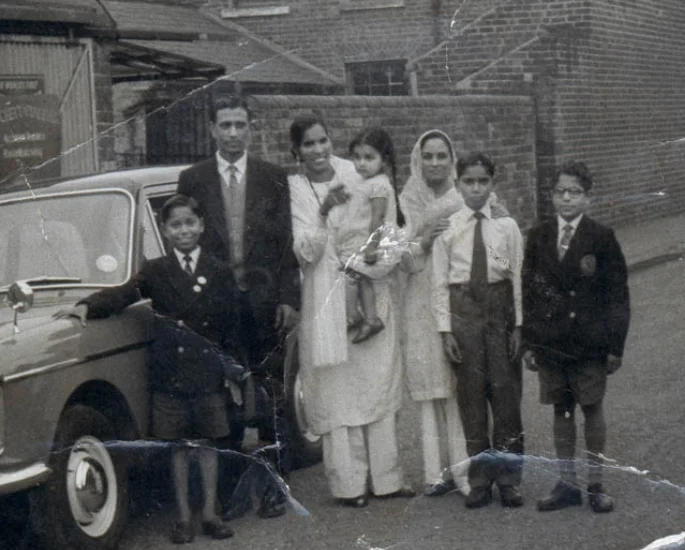
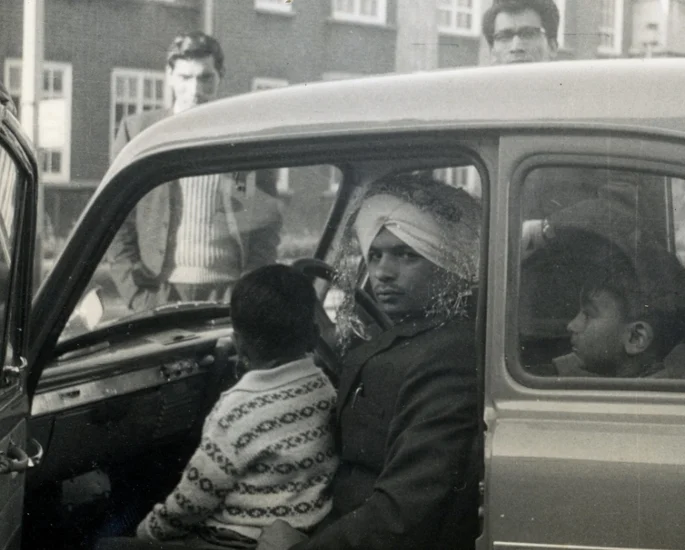
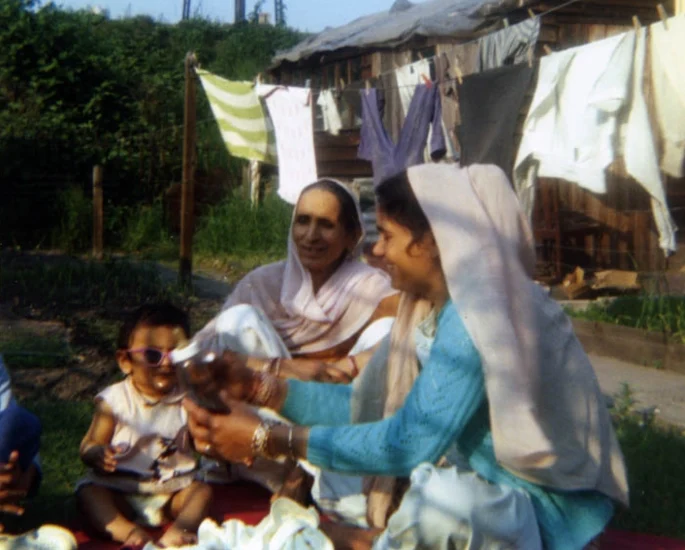
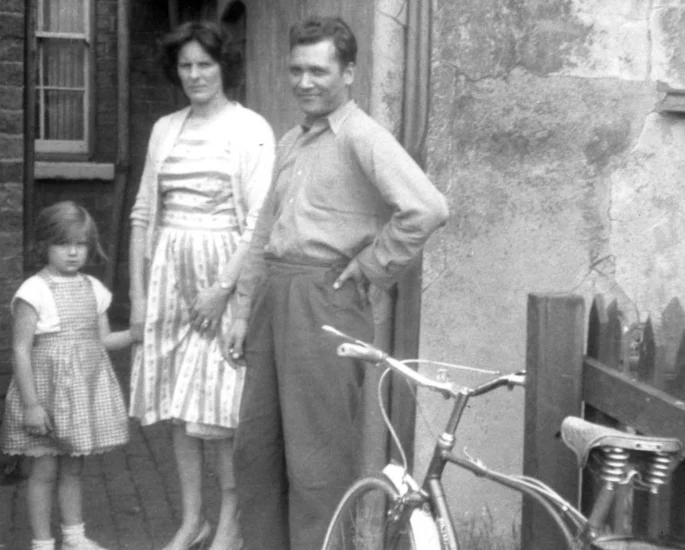
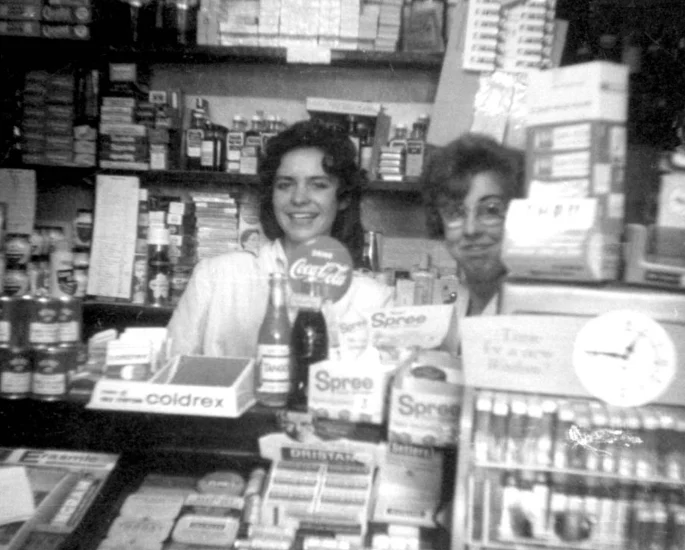
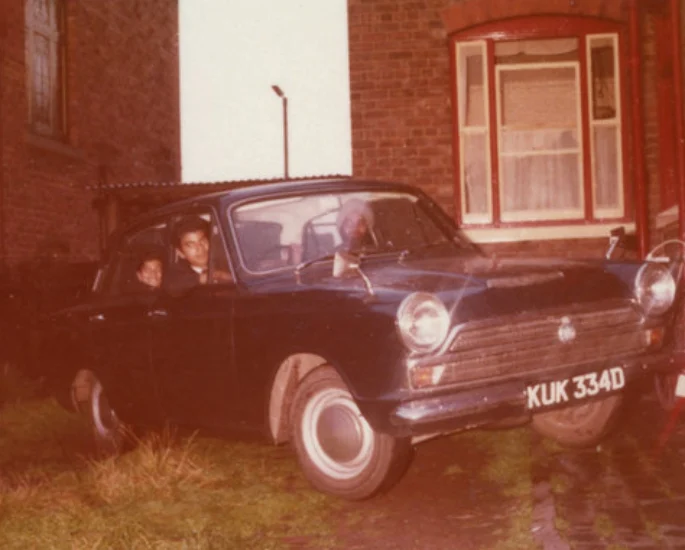
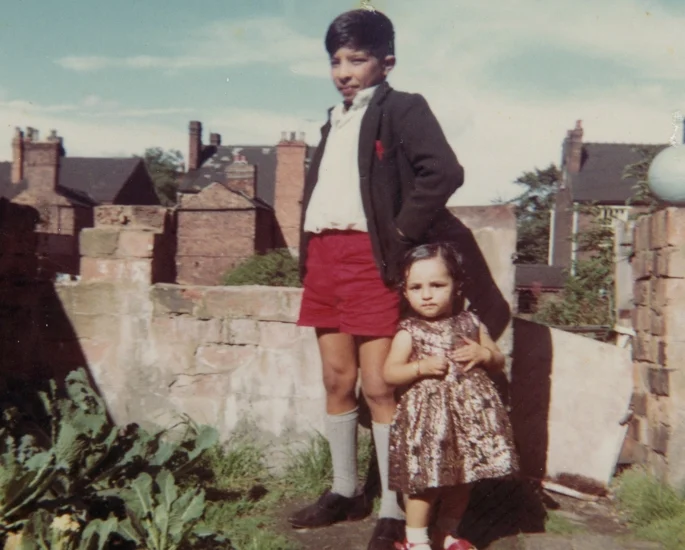
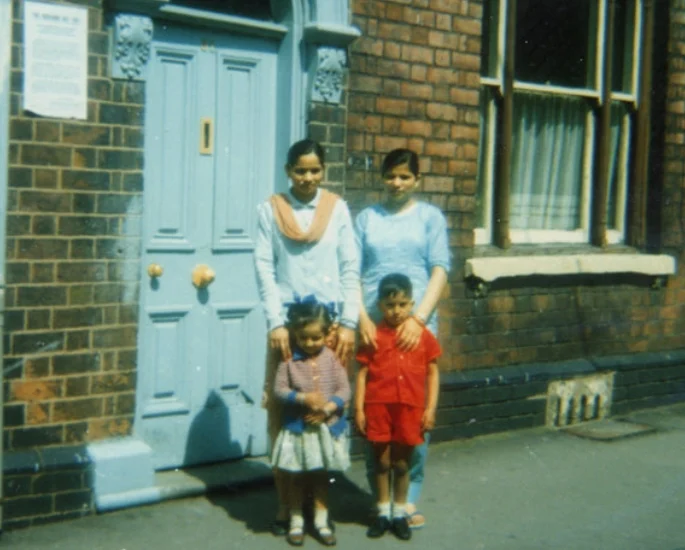
Archival photographs of the Punjabi migration to the Black Country
Funded by


The Exiles was funded by Arts Council England, Multistory, and The New Art Gallery Walsall.
Paths You Walk
Exhibited at The New Art Gallery Walsall, 2026